By Zach Elliott
Whether it was dinner with friends, a night on the town, or a trip to the movies, the COVID-19 pandemic has robbed most of the world of the type of joyful experiences that make a long week of work worth it.
One of those industries responsible for bringing entertainment into our lives – cinema – was among the hardest hit by COVID-19, losing upwards of $32 billion in 2020 alone per Yahoo!.
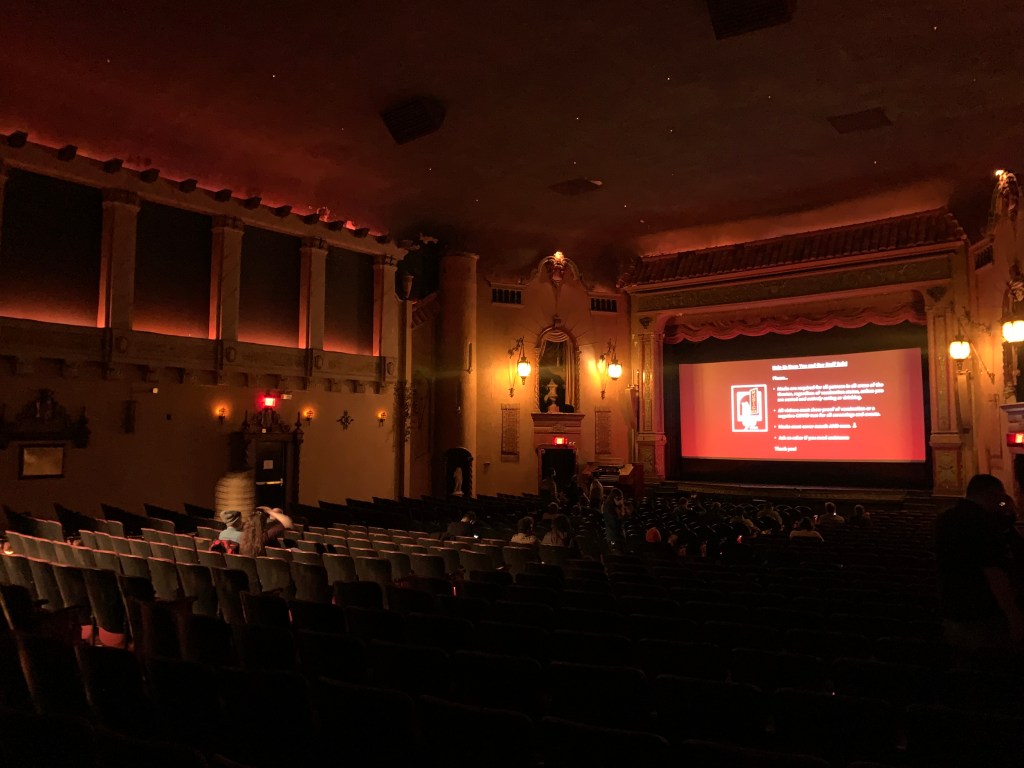
“We had to close for a year,” said Scott Holtz, general manager of The New 400 theater. “We lost a year of revenue, and even now that we are open again, we’re open down from previous years and having to be masked in theaters.”
The New 400 is one of many theaters and theater chains that were forced to close at some point during the pandemic. It went as far as Regal Theaters at one point in October 2020 closing all 536 of its U.S. theaters, according to NPR.
“At first, nobody knew what to do, nobody knew how bad it was, so it was like everybody just shut down,” said Ryan Oestrich, general manager of the Music Box Theater said in an interview for this story.
Many theaters were unable to recover from the initial shutdown in March 2020, and even more closed down in the time since. Per Crain’s Chicago Business, over 100 theaters in the Chicago area had shut their doors permanently as of April 2021.
And theaters that have survived didn’t do so without sacrifice.
“I had to let go of 13 people in two days,” said Jean de St. Aubin, Executive Director at the Gene Siskel Film Center of the Art Institute of Chicago. “It was probably the hardest thing I ever had to do, it made me physically sick.”
That kind of strain is emblematic of more widespread effects of COVID-19. According to the Center on Budget and Policy Priorities, as of November 10th – despite rising employment rates and subsequent rising incomes – almost 30 percent of American adults are still having difficulty covering “usual expenses.”
With such a burden looming in a large portion of people’s lives, getting more moviegoers back into the theater is a challenge.
“You could tell people you’re open and they’d be like, ‘I’m not ready to come back.’ or ‘I don’t want to come back, I’m not comfortable’,” said Oestrich. “Then you don’t go into the position of shaming them or guilting them, you say, ‘Okay, cool, we understand.’ And it pretty much stayed that way for a full year.”

Prior to vaccination rollouts there was warranted caution about being in any public space, including theaters. Even after their rollout there was – and still is – some lingering reticence about recommencing with public entertainment. Concerning to some is that it’s only been a few months since Chicago removed capacity restrictions in June, and there are still almost 90,000 new cases of COVID-19 each day in the U.S., per the New York Times’ Coronavirus Tracker.
Even with vaccines being available and people coming to terms with the permanency of the virus, theaters face the added challenge of a potential winter COVID surge.
“I think we’re going to just keep trudging ahead,” said Holtz. “We see some light at the end of the tunnel. It isn’t very bright, but [moviegoers] are coming back slowly but surely. I don’t see – at any point – us being closed down again.”
As wintertime acceleration in COVID cases is dependent on many variables, not the least of which is vaccination rates. As Sarah Zhang ofThe Atlantic highlighted, 59 percent of Americans are currently fully vaccinated, and an additional 5 percent would equal 16.5 million people – people who would be protected and able to safely contribute to the revitalization of suffering industries like cinema.
“The hope is that we’ll get to a place where we can live with COVID, because it’s not a pandemic, it’s an endemic now, that’s the reality,” said Oestrich.
“Living with COVID” is something that has become more prominent in the public lexicon as vaccination continues and the first wave of COVID-19 booster shots are now available. According to the Chicago Sun-Times, Mayor Lori Lightfoot got a booster shot last Friday at a pediatric vaccination site, promoting the recently authorized vaccination of children ages 12 and under.
“For goodness’ sake, get the lifesaving vaccine,” Lightfoot said. “That should happen whether you’re 5 or 85 in the city of Chicago.”
Beyond vaccinations, theaters have leaned into “living with COVID” via safety measures implemented to limit exposure. “We’ve installed air filtration systems that help filter viruses out in the air,” said Holtz. “We’ve spent extra time cleaning, but people have to wear a mask unless you’re eating.”
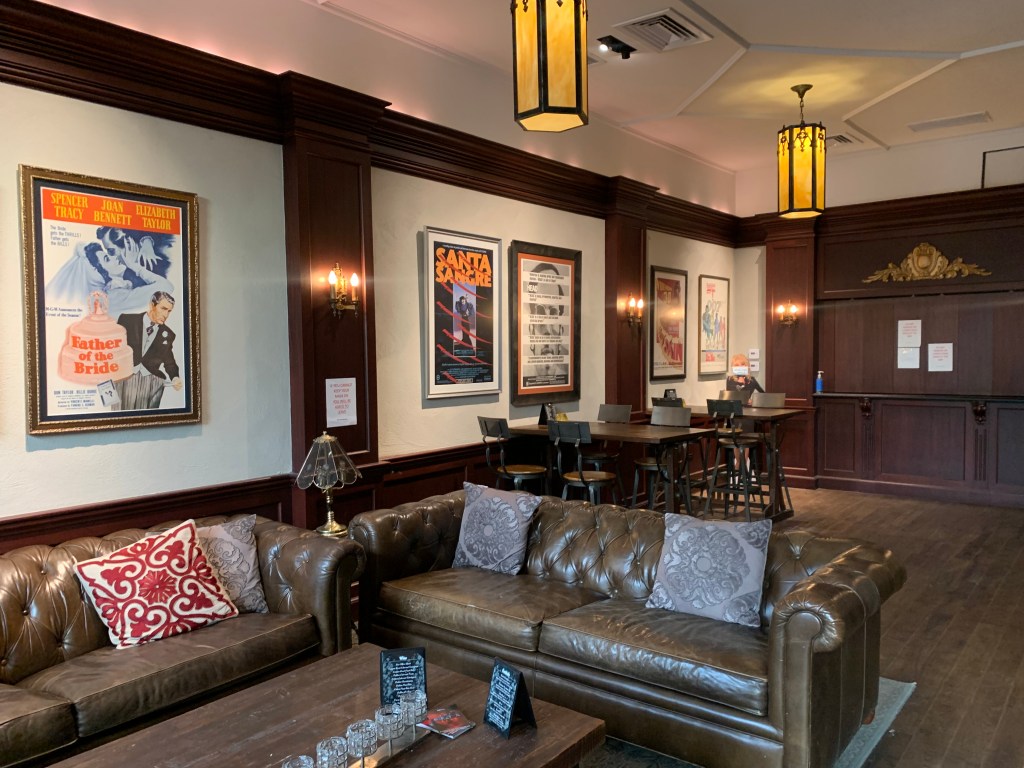
Some have taken it even further, instituting vaccine mandates for all patrons and further measures to limit any potential outbreak.
“We started making it mandatory that you have a vaccine card or a negative PCR test before almost any other movie theater did,” said de St. Aubin. “We’re in Illinois, so we have a mask mandate, but we’re also not selling concessions because we want people to keep their masks on.”
With the virus being susceptible to mutation and the impossibility of 100 percent global vaccination, it’s unlikely that there will ever be a “post-COVID” world, but that doesn’t spell more shutdowns, capacity reductions, or general doom and gloom for theaters. Speaking to Reuters, former Food and Drug Administration Commissioner Scott Gottlieb said, “We’re transitioning from the pandemic phase to the more endemic phase of this virus, where this virus just becomes a persistent menace here in the United States.”
Ultimately, movie theaters will survive. As everyone continues to learn how to live with COVID, they’ll be ready to provide entertainment, an escape from the outside world all in a safe environment– just when it might be needed the most.
“We understand [COVID]. My hope is that I don’t have to hold on to any of these measures,” said Oestrich. “That I can put it in my toolbox, pull it out if I ever need, but that we will go past it.”

 Zach E. Portfolio